The problem with laughing at “shrimp on a treadmill” is that every now and then, the shrimp has a point.
That sentence may not belong in a serious discussion about federal biomedical research funding, but here we are. The familiar examples are easy to mock: shrimp on treadmills, rabbits receiving something that sounds uncomfortably close to spa treatment, brain scans of mothers looking at pictures of their children and dogs, and other studies that sound like they escaped from a congressional comedy folder. With the right headline and a little imagination, almost any unfamiliar research method can be turned into a late-night comedy routine.
Sometimes the ridicule is unfair. Sometimes it is deserved. The challenge is knowing the difference.
That is where the current debate over NIH funding often misses the mark. Too much of the conversation starts with whether a project sounds silly. That is the wrong starting point. Serious research can sound strange when reduced to a headline. Anyone who has spent enough time around clinical research knows that the public description of a study and the scientific purpose behind it are not always close relatives.
But there is another mistake that is just as damaging. The research community cannot respond to every criticism by saying, in effect, “You just do not understand science.” Sometimes the public understands enough to be asking a fair question: Why was this funded?
That question deserves a real answer. Anything less creates distrust.
The NIH describes its mission as seeking fundamental knowledge about living systems and applying that knowledge to “enhance health, lengthen life, and reduce illness and disability.” That is a broad mission, as it should be. It supports basic science, translational work, clinical trials, public health research, and discovery whose usefulness may not be immediately visible. But it is still a mission. It is not a blank check for research as an end in itself.[1]
Research is a tool. Health is the mission.
The shrimp study may have had a scientific reason
The “shrimp on a treadmill” story has lived a long life because it is memorable. It sounds absurd. It also illustrates how a real research question can become a punchline when the method is separated from the purpose.
The point of that work was not, as the caricature suggests, to determine whether shrimp prefer cardio before or after breakfast. Reuters reviewed the popular claim and found it misleading, noting that the work involved environmental stressors and marine organism physiology, not a multimillion-dollar federal effort to see how fast shrimp could run.[2]
That does not automatically make the project wise, necessary, or appropriately funded. It simply means the first obligation of criticism is to understand what was actually being studied.
That same caution applies across many areas of biomedical research. Infection, metabolism, stress response, exercise recovery, inflammation, addiction, aging, maternal attachment, social cognition, and animal behavior are all legitimate research subjects. Some require methods that sound odd to people who do not live inside the research world.
So yes, sometimes the shrimp has a point. But the fact that a study has a scientific rationale does not end the conversation. It begins a better one.
What health question is being asked? Why does it matter? Why is this method necessary? How likely is the study to produce useful knowledge? How could that knowledge eventually improve prevention, diagnosis, treatment, quality of life, or future research?
If those questions cannot be answered in plain English, the public has reason to be skeptical.
The rabbit spa problem
Consider the NIH-funded study often described as Swedish massage for rabbits.
That phrase practically writes its own punchline. It sounds like a taxpayer-funded wellness retreat for overworked bunnies. One can almost hear the scheduling coordinator asking whether the rabbit prefers deep tissue or light pressure.
ABC News reported the example as an NIH-funded study involving mechanical Swedish massage for rabbits, while researchers described the underlying work as massage-like compressive loading after exercise to evaluate muscle recovery and inflammation. The related peer-reviewed rabbit model studied dose dependency of massage-like compressive loading following eccentric exercise and framed the work as having clinical relevance.[3]
Still, the example exposes a real problem. If a publicly funded project can be described, without much distortion, as mechanical Swedish massage for rabbits, then the burden should be on the research enterprise to explain the health rationale clearly, plainly, and publicly.
The public should not have to dig through academic language to determine whether a study is serious, silly, or something in between. That is not an anti-science position. It is a pro-trust position.
Good research can be damaged by poor communication. Poor communication invites ridicule. Ridicule erodes trust. Once trust erodes, even good research becomes harder to defend.
We see the same problem with studies that examine whether mothers respond neurologically to images of their children and dogs. Described crudely, the study becomes, “NIH asks whether moms love dogs more than children.” Described scientifically, it becomes an fMRI study involving maternal attachment, reward pathways, social cognition, and human-animal bonding. The peer-reviewed article examined brain activation patterns in mothers viewing images of their own child and dog, and Harvard’s summary noted both similarities and differences in bonding-related brain responses.[4]
That does not automatically make it a public funding priority. It does remind us that silly headlines can conceal serious questions. The real issue is not whether odd-sounding research should be banned. That would be a foolish standard. The real issue is whether publicly funded research can pass a plain-language mission test before the public is asked to pay for it.
The bigger waste may not be funny
The most wasteful research is not always the study that sounds ridiculous. Sometimes the greater waste is the study that sounds entirely respectable, gets funded, opens slowly, enrolls poorly, never completes, never reports results, and contributes little or nothing useful to health science.
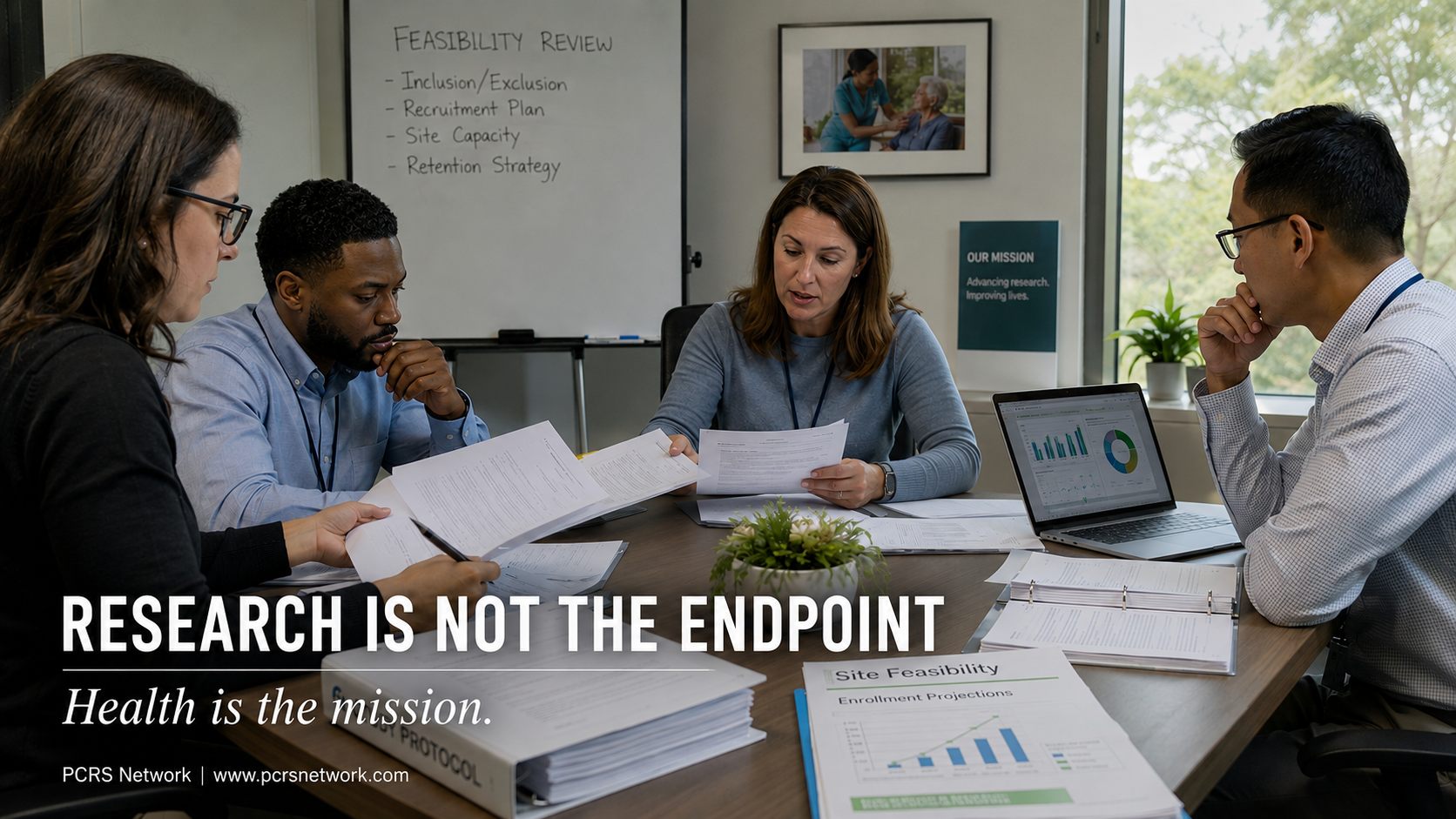
Anyone who has worked close to clinical operations has seen some version of this movie. The protocol looks elegant in the conference room. The enrollment projections look confident in the spreadsheet. The feasibility responses look encouraging, at least until someone notices that the inclusion and exclusion criteria have quietly eliminated most of the real-world patient population.
Then the study opens. The sites struggle. The coordinators are asked to find patients who barely exist. The sponsor team holds another meeting. The CRO produces another tracker. Someone suggests a rescue plan. By then, the most expensive part of the study may be the optimism that got it approved.
That is not a joke. It is a scientific, ethical, and financial problem.
Research waste is not merely an opinion from the operational trenches. Chalmers and Glasziou’s widely cited Lancet article identified avoidable waste in the production and reporting of research evidence, including problems in the questions asked, study design, nonpublication, and poor reporting.[5]
Clinical trial noncompletion and poor accrual are also well documented. One ClinicalTrials.gov analysis found that insufficient accrual was the leading reason for termination among trials terminated for reasons other than trial data. Another study found that 19% of eligible trials either terminated for failed accrual or completed with less than 85% of expected enrollment, seriously compromising scientific value.[6]
Public research funding is finite. NIH reported $35.3 billion in competing and noncompeting grants in FY 2025, within a total FY 2025 appropriation of $48.5 billion. When that much public money is involved, avoidable waste is not just an internal research management problem. It is a public accountability problem.[7]
Feasibility is not paperwork
In clinical research, feasibility is not an administrative step. Feasibility is an ethical obligation.
When a study cannot enroll, the harm is not limited to a budget variance. Sites spend time. Coordinators chase unrealistic patient profiles. Investigators lend credibility. Participants may consent to research that never produces a useful answer. Future patients wait for evidence that does not arrive.
Poor accrual is not always predictable. Good studies struggle for legitimate reasons. Disease patterns shift. Competing studies appear. Clinical practice changes. Rare populations are difficult to reach. Patients may decline participation for reasons no feasibility model anticipated.
But many enrollment failures are foreseeable. The protocol is too narrow. The visit schedule is too burdensome. The procedures are impractical. The compensation does not reflect the work. The budget does not support the site. The recruitment assumptions are based on database fantasy rather than operational reality. The site was selected because it looked good on paper, which is also how many bad decisions begin.
In those cases, failure is not bad luck. It is bad design. A protocol that cannot realistically identify, enroll, and retain enough appropriate participants is not merely inefficient. It is scientifically weak from the start. It is also ethically questionable because the study asks patients, sites, and taxpayers to invest in work that may never produce interpretable knowledge.
That should matter before funding is awarded. It should matter during review. It should matter when a study fails to meet its milestones. It should matter before the next award is made.
NIH’s simplified peer review framework now emphasizes three core factors: importance of the research, rigor and feasibility, and expertise and resources. That is the right direction. But for clinical research, feasibility should not mean “the applicant says enrollment is possible.” It should mean the study has demonstrated a credible path to completion in the real world where patients, sites, coordinators, budgets, competing trials, and visit schedules all exist at the same time.[8]
Funding a study is not success. Completing a meaningful study is success.
The bottom drawer is not a public health strategy
Even completed studies can fail the public if results disappear.
There is an ethical contract in research. Participants accept inconvenience, uncertainty, and risk because the study may produce knowledge that may lead to better medicines, devices, or treatments. Taxpayers fund research because that knowledge may improve health and quality of life.
That contract is broken when results remain unpublished, unreported, delayed, inaccessible, or unusable. A negative study still matters. An inconclusive study still matters. A failed hypothesis still matters. A terminated study may still matter if the reason for termination is reported clearly enough to help future researchers avoid the same mistake.
The reporting problem is not hypothetical. A BMJ study of NIH-funded trials found that fewer than half were published within 30 months of completion, and about one-third remained unpublished after a median follow-up of 51 months. HHS OIG later found that NIH did not ensure all NIH-funded clinical trials complied with federal results-reporting requirements.[9]
Science advances not only by learning what works. It also advances by learning what does not work. When publicly funded results vanish, the public pays twice. First, it pays for the study. Then it pays again when future researchers repeat avoidable mistakes.
No publicly funded clinical trial should be allowed to quietly disappear. No investigator or institution should receive new public funding while ignoring reporting obligations from prior publicly funded work. NIH policy states that NIH-funded awardees and investigators conducting clinical trials are expected to register and report trial results in ClinicalTrials.gov. Reporting is not a clerical afterthought. It is part of the scientific work.[10]
A study that is never reported is not merely incomplete. It is a breach of public trust.
High-risk research deserves a higher bar
Some projects do not merely need better explanation. Some require a much higher threshold before public funding is even considered. Risky pathogen research is the clearest example.
Research intended to understand emerging viruses can be critically important. The world needs serious work on pandemic prevention, viral evolution, diagnostics, vaccines, therapeutics, biosurveillance, and public health readiness.
But public funding should not be routed through complex subaward structures, across institutional and national boundaries, into high-risk pathogen work unless the oversight is airtight, reporting is timely, biosafety assurances are independently verifiable, and the public health purpose is unmistakable.
This is where controversies involving EcoHealth Alliance and the Wuhan Institute of Virology belong in the broader discussion. The point is not to litigate the origin of COVID-19 here. That is a different debate and one that remains heavily contested.
The narrower point is enough. HHS OIG found that NIH and EcoHealth Alliance did not effectively monitor awards and subawards, resulting in missed opportunities to oversee research and address compliance issues. GAO separately found that NIH had not taken near-term steps to manage risks for awards involving foreign subrecipients.[11]
When taxpayer-funded research involves pathogens with pandemic potential, “trust us” is not a governance model.
If a project cannot clearly demonstrate mission fit, risk control, transparency, independent oversight, enforceable reporting, and public accountability, it should not receive public biomedical research dollars. Not because research is bad, but because research is too important to be protected by vague assurances, or hidden by subcontracting shell games.
A public mission test
The problem with politically driven debates over research funding is that they reward the funniest headline or the loudest outrage. That is no way to govern science.
The opposite error is equally dangerous. The research community cannot treat public skepticism as ignorance by default. Sometimes critics are uninformed. Sometimes they are cherry-picking. Sometimes they are using a study as a prop in a larger political argument. But sometimes the public is asking exactly the right question.
What is the public purpose?
That question should not make serious researchers defensive. It should make the funding process better.
A publicly funded research project should be able to pass a simple public mission test. What real health or scientific problem does this address? Why is the question unanswered? Why is this design necessary? Can the study realistically be completed? Are the risks proportionate to the potential value? Will the results be reported regardless of outcome? How could the knowledge eventually improve health, care, prevention, diagnosis, treatment, quality of life, or future research?
That test does not eliminate basic science. Basic science is essential. Many transformative medical advances began as curiosity-driven inquiry with no obvious near-term product. But curiosity-driven research does not mean mission-free research.
Even basic science should be able to explain the knowledge gap it addresses and why that gap matters. Not every project must promise a new drug, device, diagnostic, or commercial application. That would be shortsighted. The history of medicine is full of discoveries whose value became visible only later.
Still, public funding should require a clear statement of purpose, a credible design, a realistic path to completion, proportionate risk, and an obligation to report. That is not anti-science. That is stewardship.
Reform is not retreat
The case for reform should not be confused with the case for retreat.
NIH-funded research has contributed enormously to medicine, public health, and scientific understanding. The United States must remain a world leader in biomedical discovery. Public funding matters because many important questions will never attract immediate commercial investment. Rare diseases, prevention, behavioral interventions, early-stage discovery, health systems research, public health, diagnostics, and basic biology all depend in part on public investment.
But because NIH funding matters, it must be protected from avoidable waste and abuse.
That means asking harder questions before funding, evaluating feasibility with operational honesty, refusing to confuse activity with progress, making sure completed studies report results, holding institutions accountable when reporting obligations are ignored, applying heightened scrutiny to high-risk research, and explaining unusual projects in plain English before critics define them by ridicule.
The goal should not be less research. The goal should be better research: research that completes, research that reports, research that can be understood by the public, research that answers real questions, and research that improves the lives of patients, families, clinicians, healthcare consumers, and communities.
The better joke
It is easy to laugh at shrimp on treadmills, rabbit massages, monkey casinos, hot tubs, and brain scans involving mothers, children, and dogs. Sometimes the laughter is unfair. Sometimes it is well earned.
But the better joke may be on all of us if we spend too much time arguing over the funny examples and not enough time fixing the serious failures.
A silly-sounding study with a legitimate purpose may be defensible. A serious-sounding study that is unnecessary, infeasible, unfinished, unreported, or disconnected from health impact may be far more wasteful.
That is where the public conversation should go.
Public funding for research should remain generous, serious, strategic, and mission-driven. It should support discovery. It should tolerate scientific uncertainty. It should allow room for questions that do not sound obvious to the public at first hearing.
But it should never lose sight of the endpoint.
Research is a tool. Health is the mission.
Endnotes
- National Institutes of Health, “About NIH,” accessed June 18, 2026, https://www.nih.gov/about-nih.
- Reuters Fact Check, “Shrimp on a Treadmill Study and Cost Misrepresented,” Reuters, February 21, 2025, https://www.reuters.com/fact-check/shrimp-treadmill-study-cost-misrepresented-2025-02-21/.
- John Parkinson, “Swedish Massages for Rabbits and Other Taxpayer Expenses,” ABC News, October 22, 2014, https://abcnews.go.com/Politics/swedish-massages-rabbits-taxpayer-expenses/story?id=26373805; Manuela M. Berrueta et al., “Stretching Impacts Inflammation Resolution in Connective Tissue,” Journal of Cellular Physiology 231, no. 7 (2016): 1621–1627, https://doi.org/10.1002/jcp.25263.
- Lori A. A. R. Stoeckel et al., “Patterns of Brain Activation when Mothers View Their Own Child and Dog: An fMRI Study,” PLOS ONE 9, no. 10 (2014): e107205, https://pmc.ncbi.nlm.nih.gov/articles/PMC4184794/.
- Iain Chalmers and Paul Glasziou, “Avoidable Waste in the Production and Reporting of Research Evidence,” The Lancet 374, no. 9683 (2009): 86–89, https://pubmed.ncbi.nlm.nih.gov/19525005/.
- Joseph S. Ross et al., “Trial Publication after Registration in ClinicalTrials.gov: A Cross-Sectional Analysis,” PLOS Medicine 6, no. 9 (2009): e1000144; Christopher P. Jones et al., “Terminated Trials in the ClinicalTrials.gov Results Database: Evaluation of Availability of Primary Outcome Data and Reasons for Termination,” PLOS ONE 10, no. 5 (2015): e0127242, https://pmc.ncbi.nlm.nih.gov/articles/PMC4444136/.
- National Institutes of Health Office of Extramural Research, “Fiscal Year 2025 by the Numbers: Extramural Grant Investments in Research,” NIH Extramural Nexus, March 2026, https://grants.nih.gov/news-events/nih-extramural-nexus-news/2026/03/fiscal-year-2025-by-the-numbers-extramural-grant-investments-in-research.
- National Institutes of Health Office of Extramural Research, “Simplified Peer Review Framework,” accessed June 18, 2026, https://grants.nih.gov/policy-and-compliance/policy-topics/peer-review/simplifying-review/framework.
- Michael B. Ross et al., “Publication of NIH Funded Trials Registered in ClinicalTrials.gov: Cross Sectional Analysis,” BMJ 344 (2012): d7292, https://www.bmj.com/content/344/bmj.d7292; U.S. Department of Health and Human Services, Office of Inspector General, “NIH Did Not Ensure That All Clinical Trial Results Were Reported in Accordance With Federal Requirements,” August 2022, https://oig.hhs.gov/oas/reports/region6/62107000.asp.
- National Institutes of Health Office of Extramural Research, “Clinical Trial Requirements for Grants and Contracts,” accessed June 18, 2026, https://grants.nih.gov/policy-and-compliance/policy-topics/clinical-trials/reporting/understanding.
- U.S. Department of Health and Human Services, Office of Inspector General, “The National Institutes of Health and EcoHealth Alliance Did Not Effectively Monitor Awards and Subawards, Resulting in Missed Opportunities to Oversee Research and Other Deficiencies,” January 25, 2023, https://oig.hhs.gov/reports/all/2023/the-national-institutes-of-health-and-ecohealth-alliance-did-not-effectively-monitor-awards-and-subawards-resulting-in-missed-opportunities-to-oversee-research-and-other-deficiencies/; U.S. Government Accountability Office, “NIH Could Take Additional Actions to Manage Risks Involving Foreign Subrecipients,” GAO-23-106119, September 2023, https://www.gao.gov/products/gao-23-106119.